

While researching Morita Therapy for my last post, I stumbled across several other Japanese concepts on how to live well. The more I read, the more they stopped me in my tracks.
These principles are simple, practical and profound, pointing toward something I believe is missing today: a deeper, more meaningful way of living.
I’m not an expert in Japanese philosophy or culture so think of this post as an invitation for your own exploration into mindful living.
I have used both Google Gemini deep research and Google NotebookLM to create a road map for this journey. I find both tools very useful in creating guides that I can use to learn new ideas.
Ancient wisdom for modern minds
The art of living simply
Japanese Zen philosophy has deep historical roots stretching back more than a thousand years. In Japan it has taken a distinctive cultural form, shaping not only religious practice but also everyday aesthetics and disciplines from tea ceremony and calligraphy to gardening and martial arts. Over centuries, Zen has became woven into the fabric of Japanese culture as a quiet philosophy of attention, discipline, and presence.
What makes Zen remarkable is its emphasis on direct experience rather than abstract belief. Instead of asking people to adopt complex doctrines, Zen encourages practices that bring awareness to ordinary life: breathing, sitting, walking, working, and observing the mind as it is. The aim is not to escape the world but to see it clearly.
These ideas offer a steady path toward living with greater awareness and depth. It invites us to appreciate the present, accept life’s flaws, and keep moving forward with grace.
These principles are not reserved for monks but can be practiced by anyone, anywhere, in small, daily ways. Here are several key concepts to help you get started.
Ichi-go Ichi-e – one time, one encounter
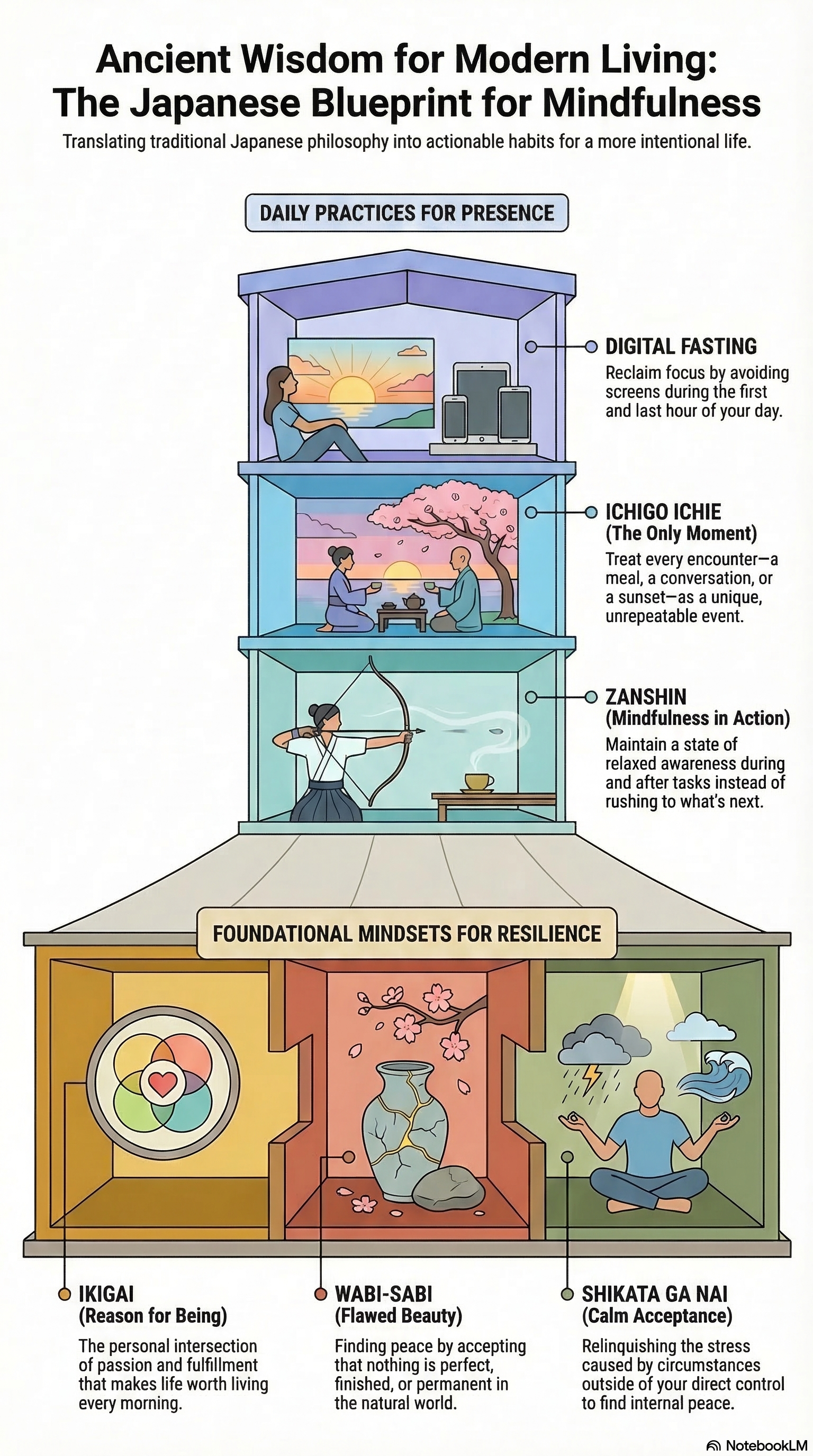
This concept reminds us to treasure the unrepeatable nature of the moment. It translates to “one time, one meeting,” suggesting that every encounter, whether a tea ceremony or a casual chat, is unique and will never happen exactly the same way again. We can learn to pay attention and give gratitude for the present moment.
Zanshin – savour the moment
Zanshin refers to a state of relaxed, alert awareness that remains even after an action is finished. We often rush through a task, like exercising, eating or washing dishes so we can quickly move on to the next thing.
Zanshin asks us to savor the “afterglow” of our actions, allowing for space and intentionality between tasks rather than moving mindlessly through the day.
Ikigai – your reason for being
Ikigai is often translated as “a reason for being” or the thing that makes life worth living. While often shown in the West as a career-focused Venn diagram, in Japan, it is much more personal and simple.
It is the reason you jump out of bed in the morning. Your ikigai could be a grand passion, but it can also be as simple as the joy of going for a walk, having your cup of coffee, or spending time with a loved one.
Wabi-Sabi – beauty in imperfection
Wabi-sabi is the appreciation of things that are “imperfect, impermanent, and incomplete”. Instead of chasing the ideal of perfection, wabi-sabi finds beauty in the cracks of a teacup, the weathered surface of an old wooden table, or the natural signs of aging. It encourages us to let go of perfectionism and accept life as it is.
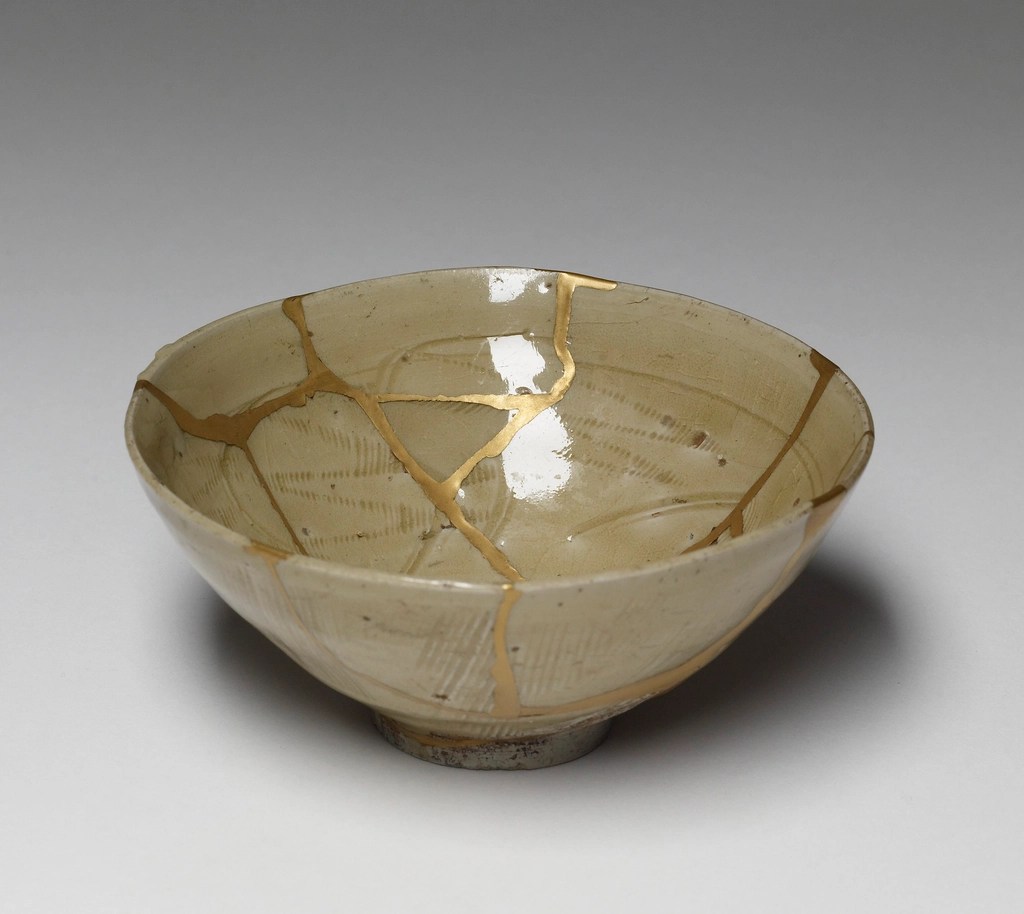
Kintsugi is the practice of repairing broken pottery using lacquer mixed with powdered gold, silver, or platinum. Rather than hiding cracks, the repair highlights them, turning the damage into part of the object’s beauty and history. It reflects the idea that flaws and cracks don’t need to be hidden but can be turned into something beautiful to acknowledge and honour.
Hara hachi bu – the 80% rule
Hara hachi bu is a traditional Japanese saying and dietary practice that translates roughly to “Fill your belly to 80 percent”. It is an ancient piece of wisdom that advises against eating until you are completely full.
This can be applied to other areas as well, for example most modern work cultures push people to operate at 100% all the time. The results are predictable: fatigue, poor thinking, and eventually burnout. By applying this principle you intentionally stop before you are exhausted.
Instead of pushing until you are completely drained, aim to finish your workday with energy left. That “20% margin” preserves your clarity, creativity, and resilience.
You can begin now
You don’t need to master these concepts overnight. The beauty of these principles is that they are gentle reminders to live more wholeheartedly.
You might start by finding one small ikigai for tomorrow morning or choosing to find wabi-sabi beauty in one imperfect thing in your home.
No small act is truly small, they have the potential to carry ripples through your day.

 Exodus